 0
0
 0
0
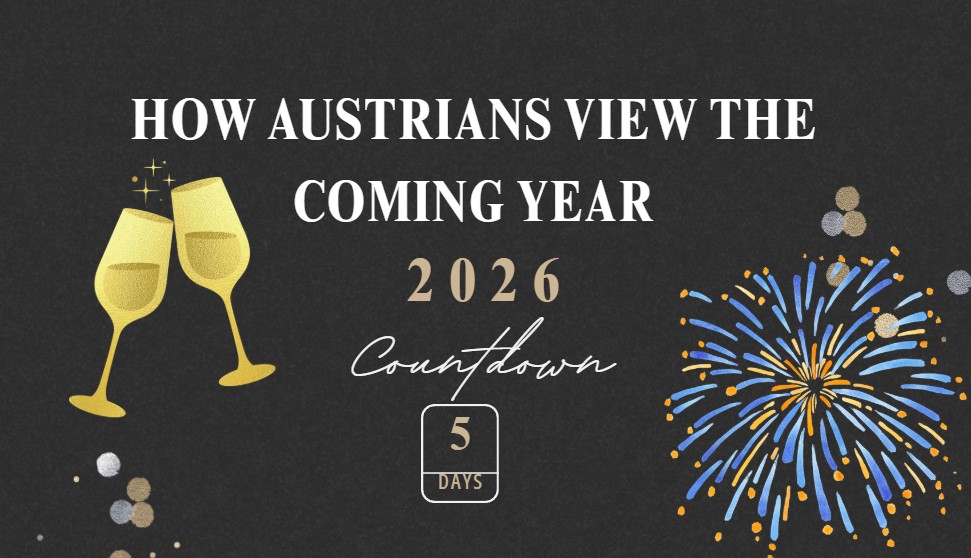
As Austria prepares to ring in the New Year, the usual festive cheer is increasingly accompanied by skepticism and concern about what lies ahead. Two surveys conducted around the turn of the year reveal a clear trend: while most people still prefer celebrating New Year’s Eve with family and friends, younger Austrians are noticeably more optimistic about 2026 than older generations.
A Moment of Reflection Amid Festivities
When New Year’s Eve arrives, fireworks light up the sky and champagne corks pop across the country. Yet for many, the transition into a new year is also a moment of introspection—an opportunity to consider personal changes and to reflect on what the coming year may bring. In earlier times, this moment was often filled with confidence. Today, in an era marked by multiple crises, the mood has shifted toward caution.
Majority Lacks Confidence in 2026
A representative survey of 1,029 people conducted for the Krone newspaper by the Institute for Demoscopy and Data Analysis (IFDD) shows that 56 percent of Austrians feel “not at all” or “rather not” confident about the new year. Only six percent view 2026 with strong optimism.
Political affiliation plays a significant role:
- 89 percent of FPÖ voters express a negative outlook.
- 73 percent of SPÖ voters feel positive about the year ahead.
One of the most striking findings concerns age: 55 percent of respondents under 30 feel optimistic about 2026, while older Austrians tend to be more pessimistic.
Few Fear Job Loss, Few Make Resolutions
Only 23 percent of NEOS voters fear losing their job—likely reflecting the party’s strong base among entrepreneurs, many of whom are concerned about the weak economic climate.
When it comes to New Year’s resolutions, most Austrians simply don’t make them.
- 75 percent say they have no resolutions at all.
- A separate IMAS survey of 1,022 people shows a similar figure at 68 percent.
Among those who do set goals, the most common resolutions are:
- More exercise (42 percent)
- Taking better care of oneself (35 percent)
- Healthier eating (34 percent)
- Spending less time on negative social media (12 percent)
New Year’s Eve Parties Losing Popularity
According to the IFDD, the cultural significance of New Year’s Eve is declining.
- 32 percent say it is just a day like any other.
- 14 percent openly dislike the holiday.
- Only one in four still sees the night as an occasion for fun.
When asked how they plan to spend the evening, the answers were remarkably consistent:
- 59 percent will celebrate with family.
- 43 percent will stay at home.
- 28 percent will meet with friends.
- Only 4 percent plan to attend a party—just 14 percent among young people.
Meanwhile, six percent expect to spend the night alone, without fireworks or champagne.
- Hector Pascua with reports from krone.at/picture: canva.com


This post has already been read 9381 times!